Deal intelligence for global energy operations

Hundreds of active regional deals lived across separate spreadsheets and trackers, so every review began with hours of manual stitching. I led the design of The Pacific Platform, a single control cockpit that consolidated them into one workflow aligned interface and shifted finance from reconciliation to real time performance management.
What if finance could stop reconciling and start managing?
Over 10+ interviews with regional deal leads, finance controllers, and portfolio managers, one truth kept surfacing: the data existed, but never in one place at one time. Nobody trusted a number until it had been stitched together by hand.
By the time a number reached a slide, it was already a week old.
Regional deals each lived in their own tracker. Preparing a single review meant exporting every one, stitching them into a master sheet, chasing owners for missing updates, and recomputing burn by hand before anything could be presented. The pipeline was real, but it was never current.
One source of truth, read in a glance.
If the pipeline consolidated itself, the job could change entirely: from assembling the numbers to acting on them.
The Pacific Platform: a deal cockpit finance can trust.
One control hub that consolidates hundreds of regional deals into a single, workflow aligned interface, with budget, status, and compliance living on the same card.

The measure of success was not a feature list. It was a finance leader opening one screen and, for the first time, trusting the number they saw.
Five views, each answering one question a leader actually asks.
The navigation mirrors the job, not the database. Every view resolves a single question, so scanning replaces searching.
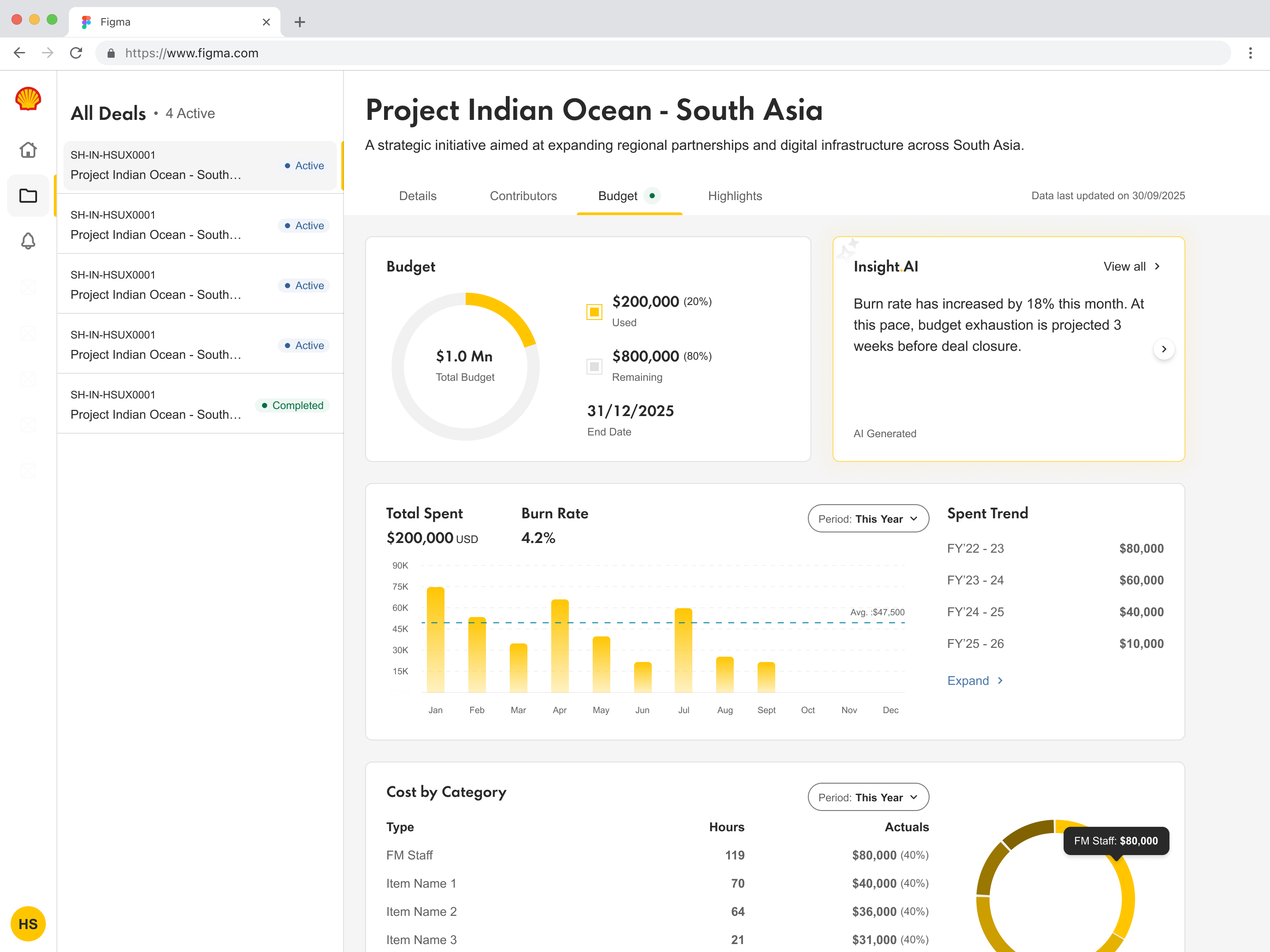
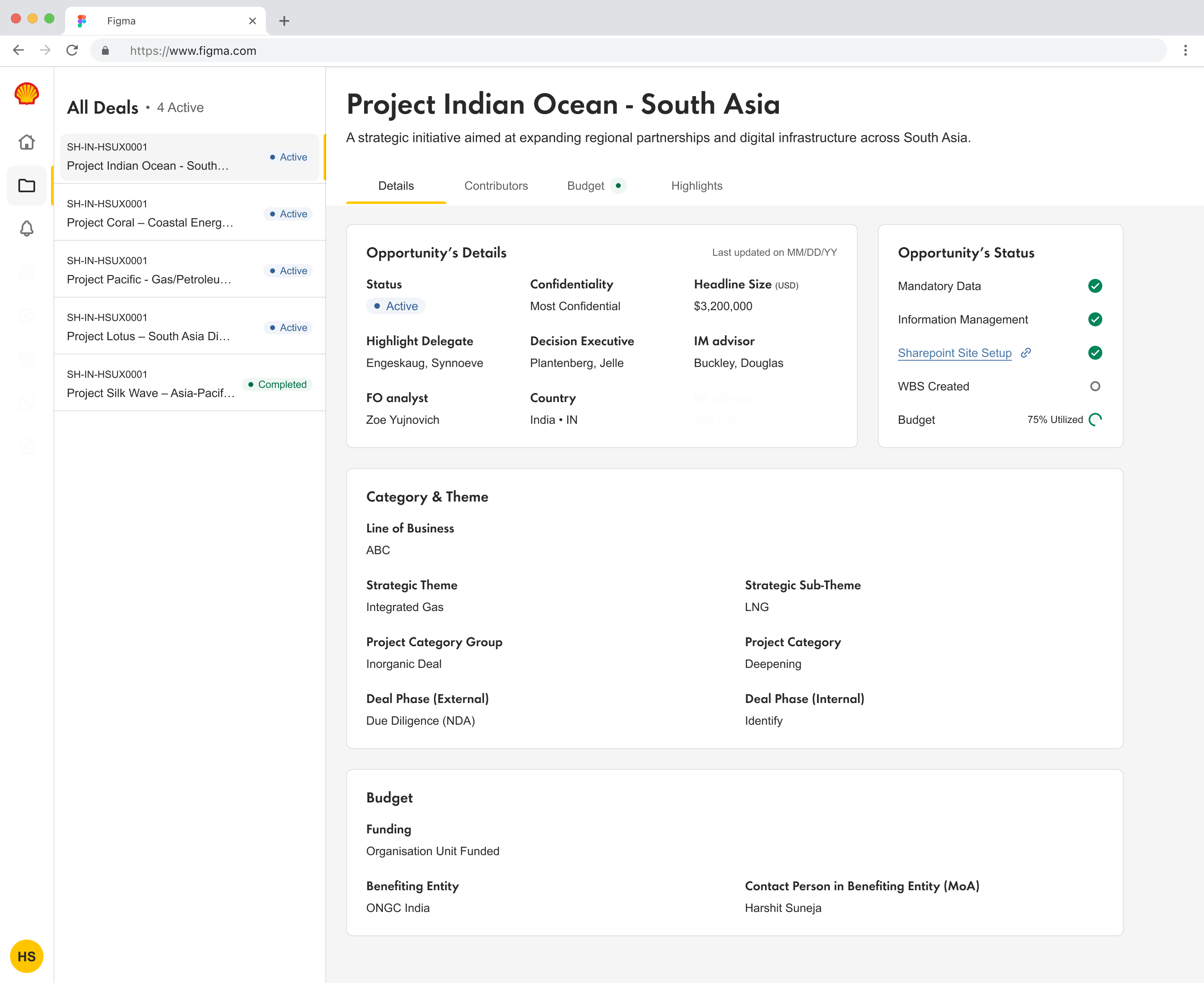
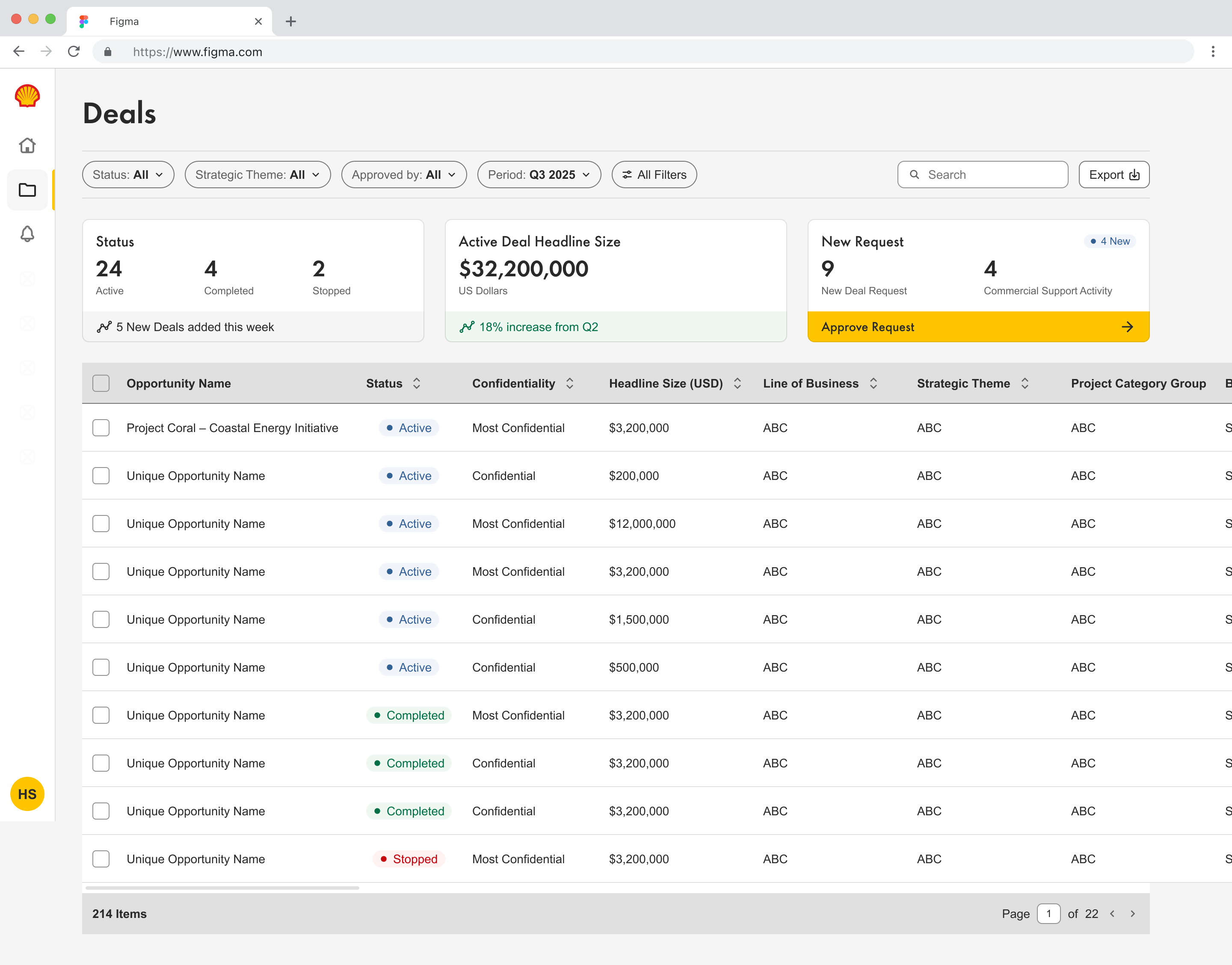
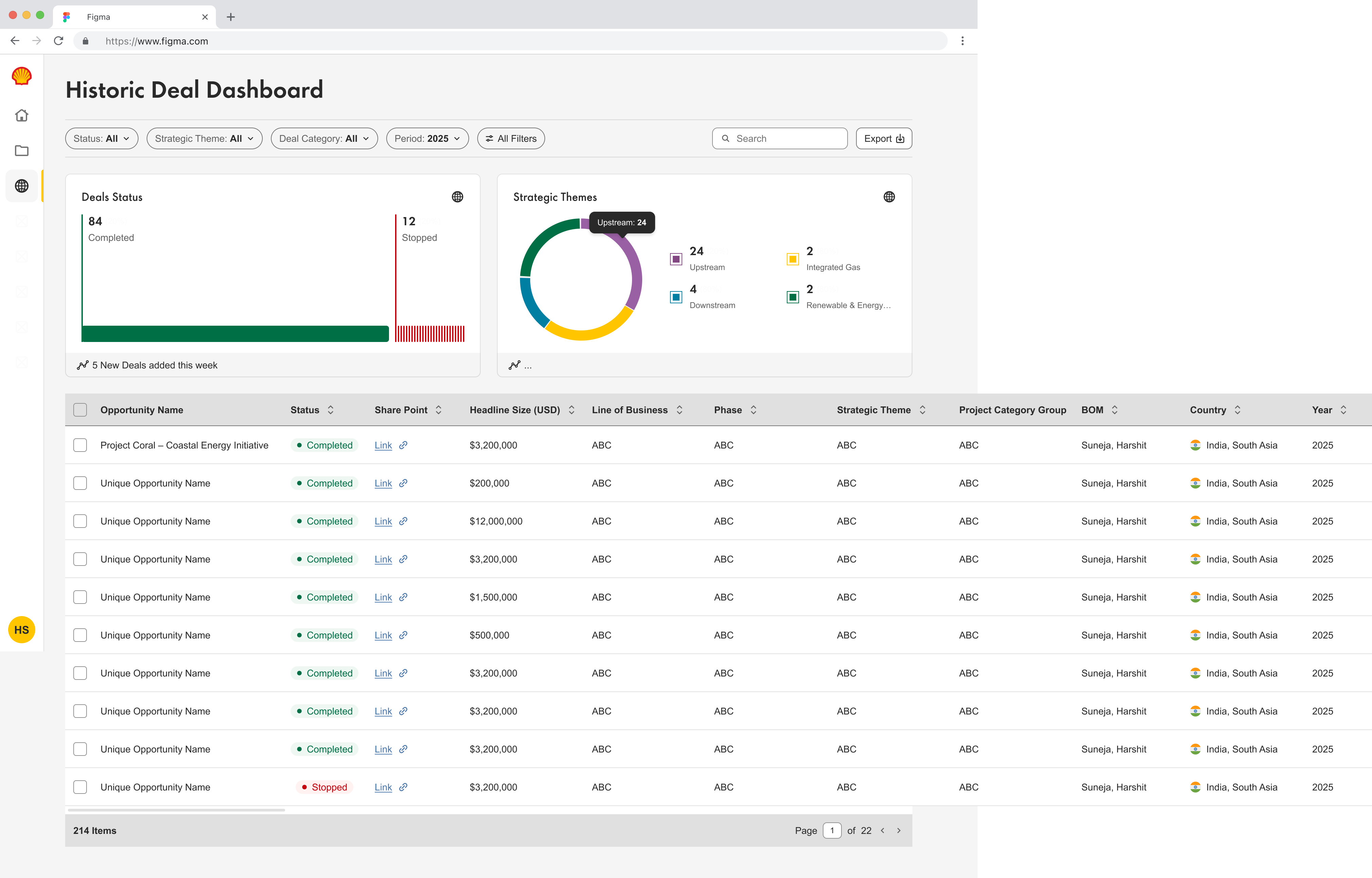
We sat with the people who lived in the spreadsheets.
Before designing a single screen, I mapped how deal management actually happened. The friction was consistent across every region.
Needs to log time and budget without spreadsheet gymnastics, and to know which compliance gate is blocking progress.
Frustration Status lives in their head and three tabs, so updates slip.
Needs a single source of truth for planned versus actual cost, with burn visible as it happens.
Frustration Spends more time stitching data than interpreting it.
Needs burn and compliance trends across all regions at a glance.
Frustration Sees a curated snapshot, never the live pipeline.
We identified the most legible way to bring the pipeline to life.
The old process was not a workflow, it was a reconciliation ritual repeated every cycle. The design goal was blunt: remove every step a system could do for a human.
Before / After- Export each region's tracker by hand
- Stitch them into a master spreadsheet
- Chase deal owners for missing updates
- Recompute burn and margin manually
- Rebuild the review slide deck
- Circulate, then repeat next cycle
- Open the cockpit to a live pipeline
- Read burn, budget, and risk in place
- Act on the deal that is slipping
We explored three cockpit models: a lightweight summary, a deep single deal workspace, and a high density pipeline with metadata and compliance on the primary cards. We bet on the third. In enterprise finance, the cost of a second click is a lost thread, so legibility beats minimalism.
Testing an early split layout, users kept losing the thread between a deal and its money. The fix was not more screens, it was fewer: budget, status, and compliance had to live on the same card.
A live cockpit answers what is happening. Leaders also ask what to do about it.

Proactive risk checks flag anomalies and surface the deal at risk before it reaches quarter close.
Grounded, not guessing means every answer traces back to a real number in the pipeline, so trust is earned.
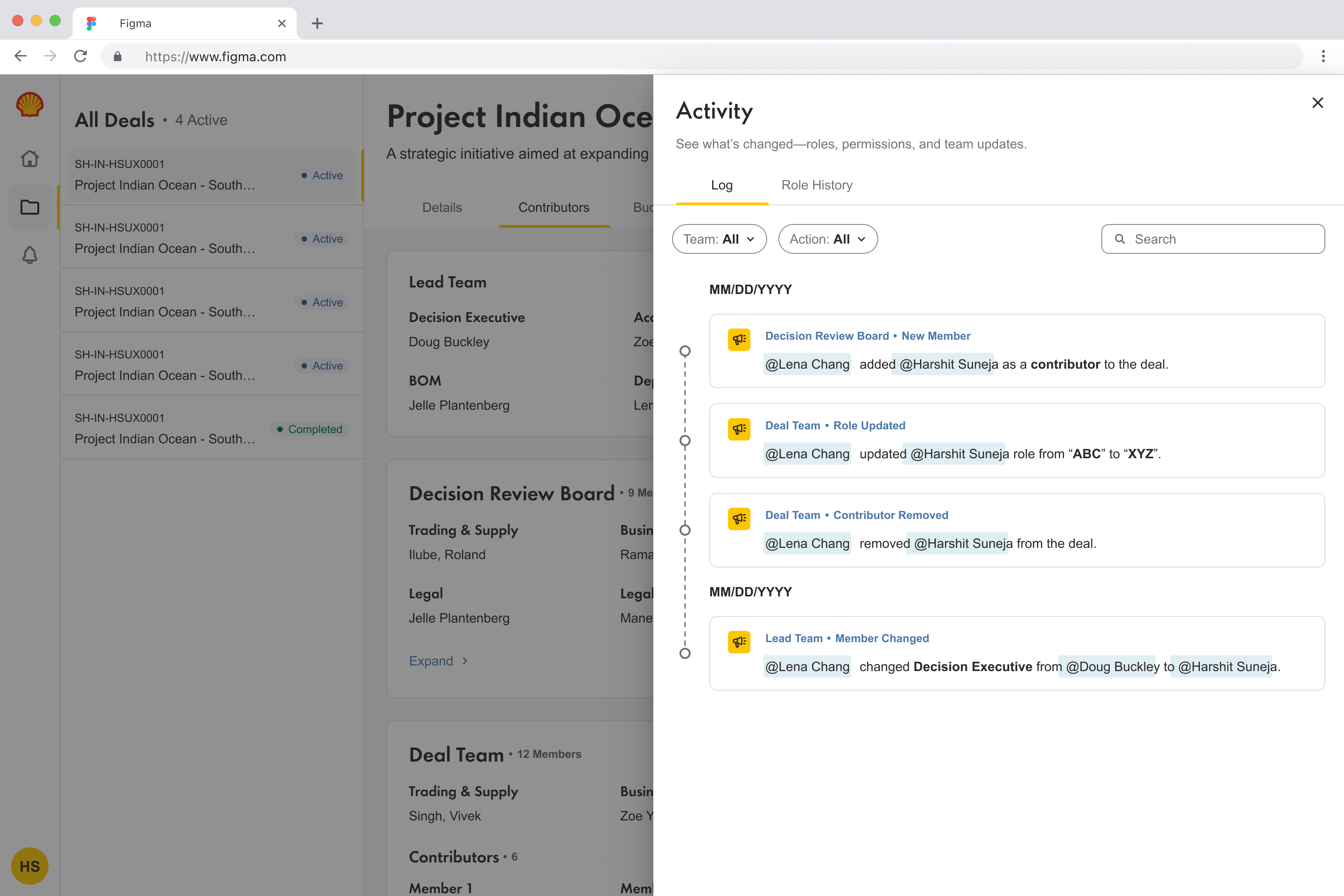
The unglamorous work that makes a cockpit trustworthy.
Empty states, help flows, and error pages were standardised so the platform stayed calm and legible at every edge.


From reconciliation to performance management.
What I learned.
- Complex scenario modeling. Deferred so phase one could nail a single source of truth first.
- Custom report builders. Standardised the review taxonomy to keep every dashboard reading the same way.
- Full editing permissions. Capped inputs in v1 to keep data entry lightweight and the pipeline trustworthy.